For a ceramics studio: a page for every course, four-step booking and a warm, photography-led design.
- Sector
- Ceramics studio (concept)
- Year
- 2026
- Services
- Websites, Search and content
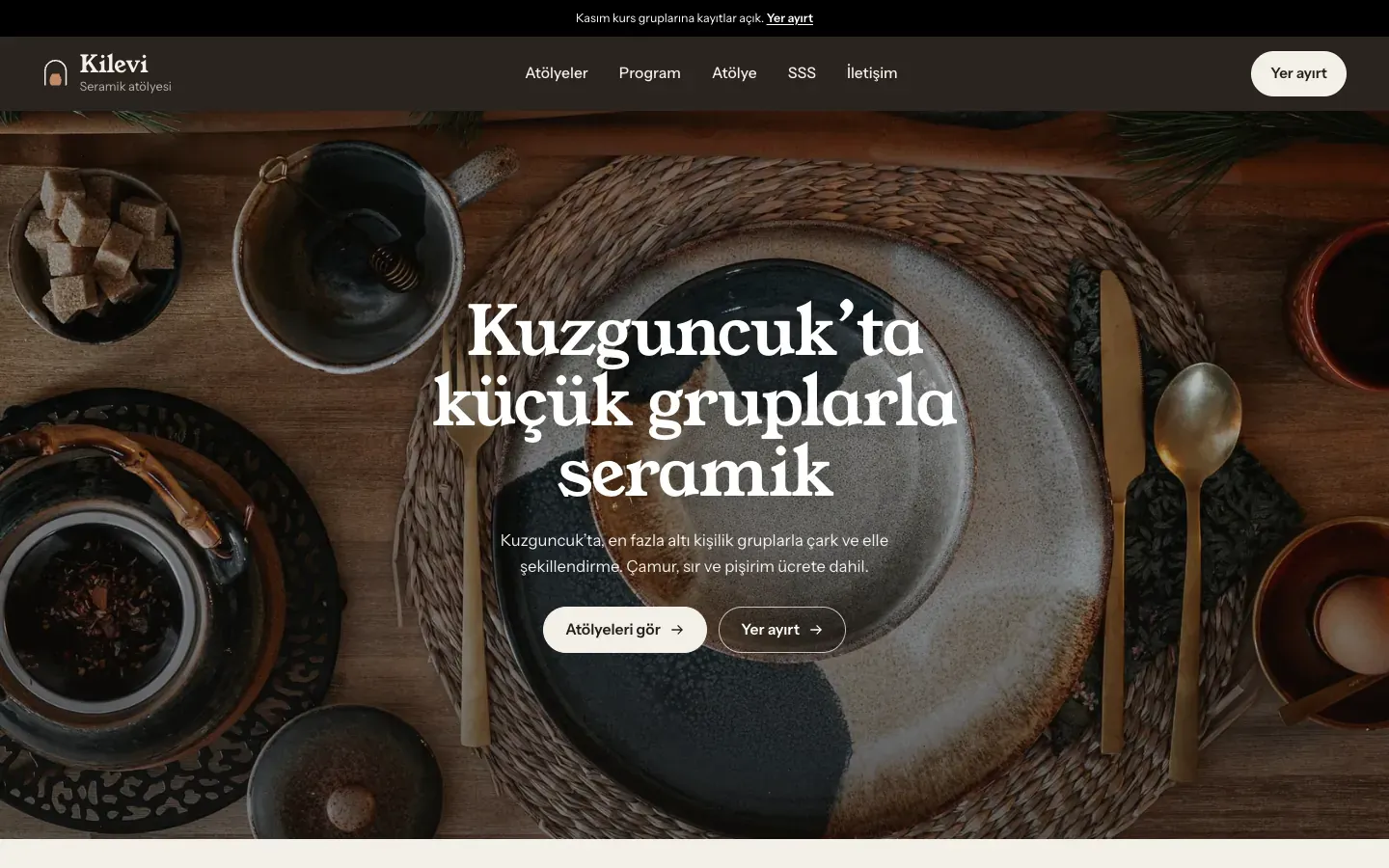
Kilevi is a concept project we built to show our Launch package: a ceramics studio in Kuzguncuk that works with small groups and does not exist. We made a separate page for each of its four workshops, a four-step booking flow and a Google-ready setup. The design takes its cue from the sites of good ceramics brands: large photographs, a calm voice and few, clear buttons.
✦ Measurement
2.3 sOn a slow mobile connection
0.7 sOn desktop
Home page load time
The time until the largest element, the photo on the first screen, appears. The Lighthouse performance score is 98 on mobile and 100 on desktop; accessibility, best practices and SEO are 100 on both. The site is not live, so we measured a local production build with Google Lighthouse.
Tools we used Astro · Sharp · Unsplash · Young Serif · Instrument Sans · Schema.org · Google Lighthouse
✦ Context
On a small service business’s site, visitors look for three things: what happens there, what it costs and when they can come. On Kilevi we answer them in the same order, from the first screen of the home page to the last step of the booking flow. Prices, hours and group sizes come from a single source, so the pages, the booking form and the data given to Google always show the same numbers.
✦ What we did · 01
A page for every workshop
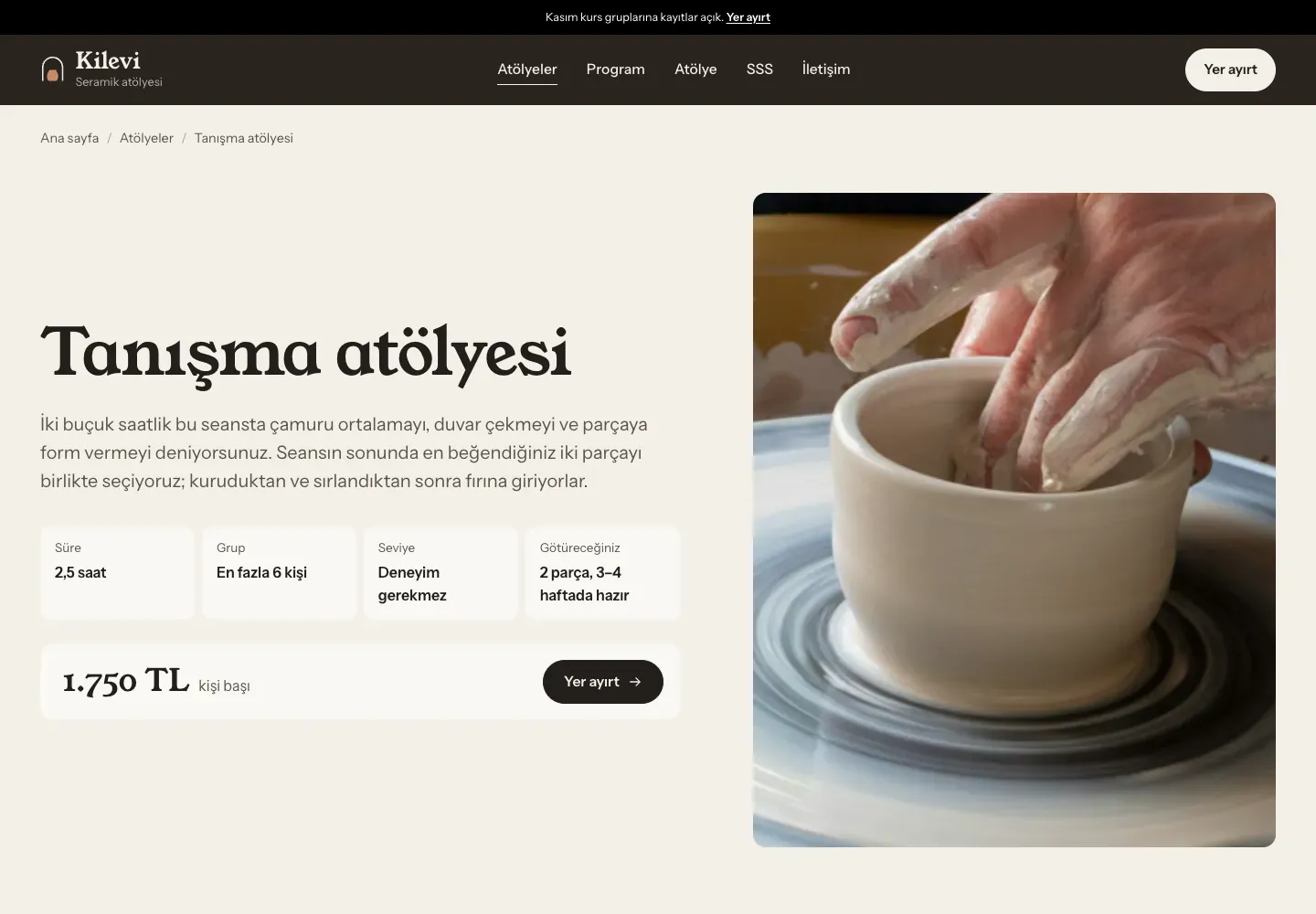
We made four separate pages: the taster session, the wheel course, hand-building and private groups. Each one shows the duration, group size, price, how the session runs, what is included and questions specific to that workshop, so a search for a wheel course or a pottery birthday party lands on the matching page.
✦ What we did · 02
Booking in four steps
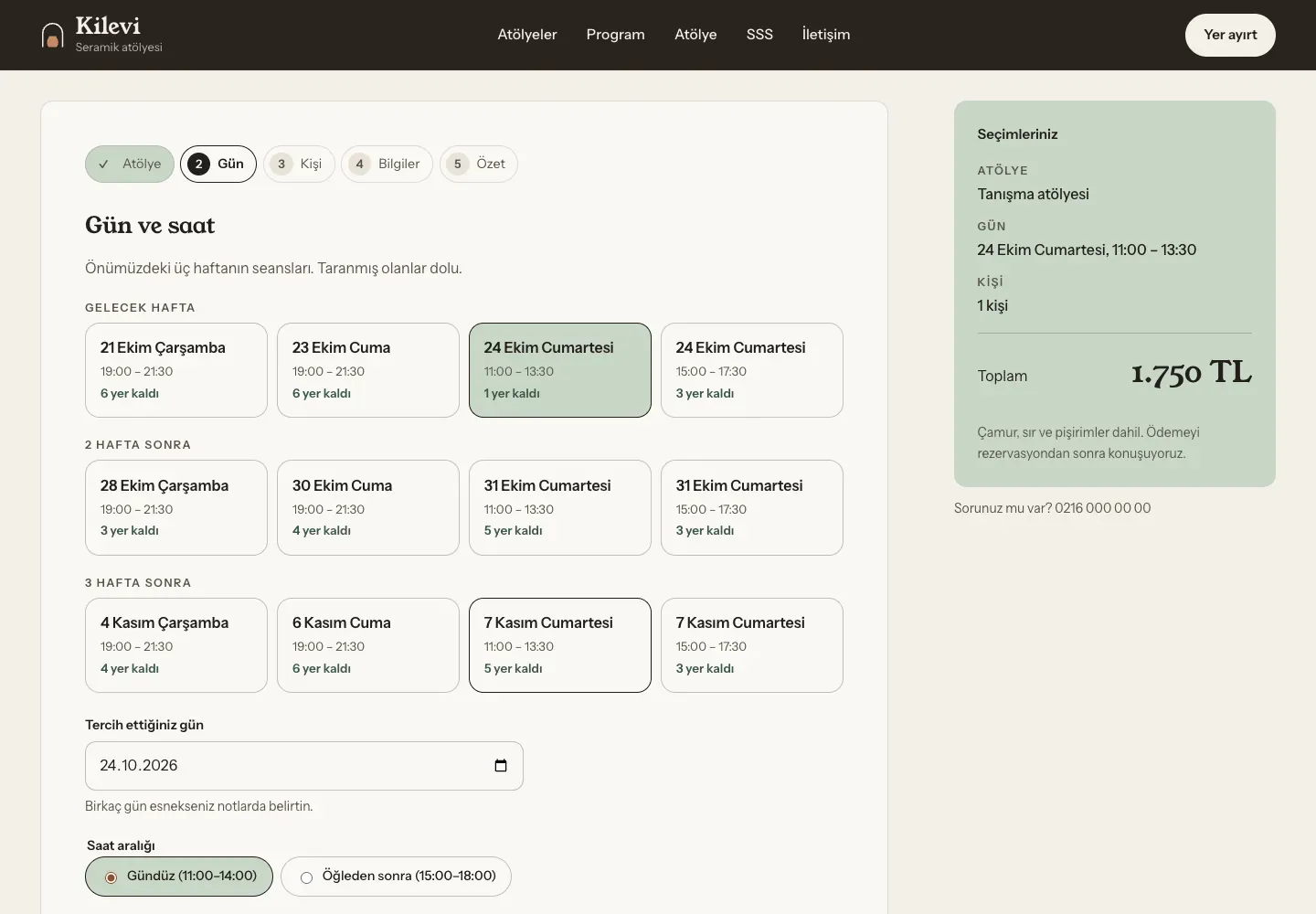
Workshop, day, number of people and contact details, then a summary. Sessions are generated from the weekly programme: full sessions cannot be picked and the group size is capped by the seats left. Private groups request a day instead of picking a slot, and the time options follow the chosen day. The weekly programme on the home page is laid out like a week planner, and every session leads straight to booking. As a demo the form sends nothing; on a real project it would connect to the studio’s booking system.
✦ What we did · 03
A mood built on photography
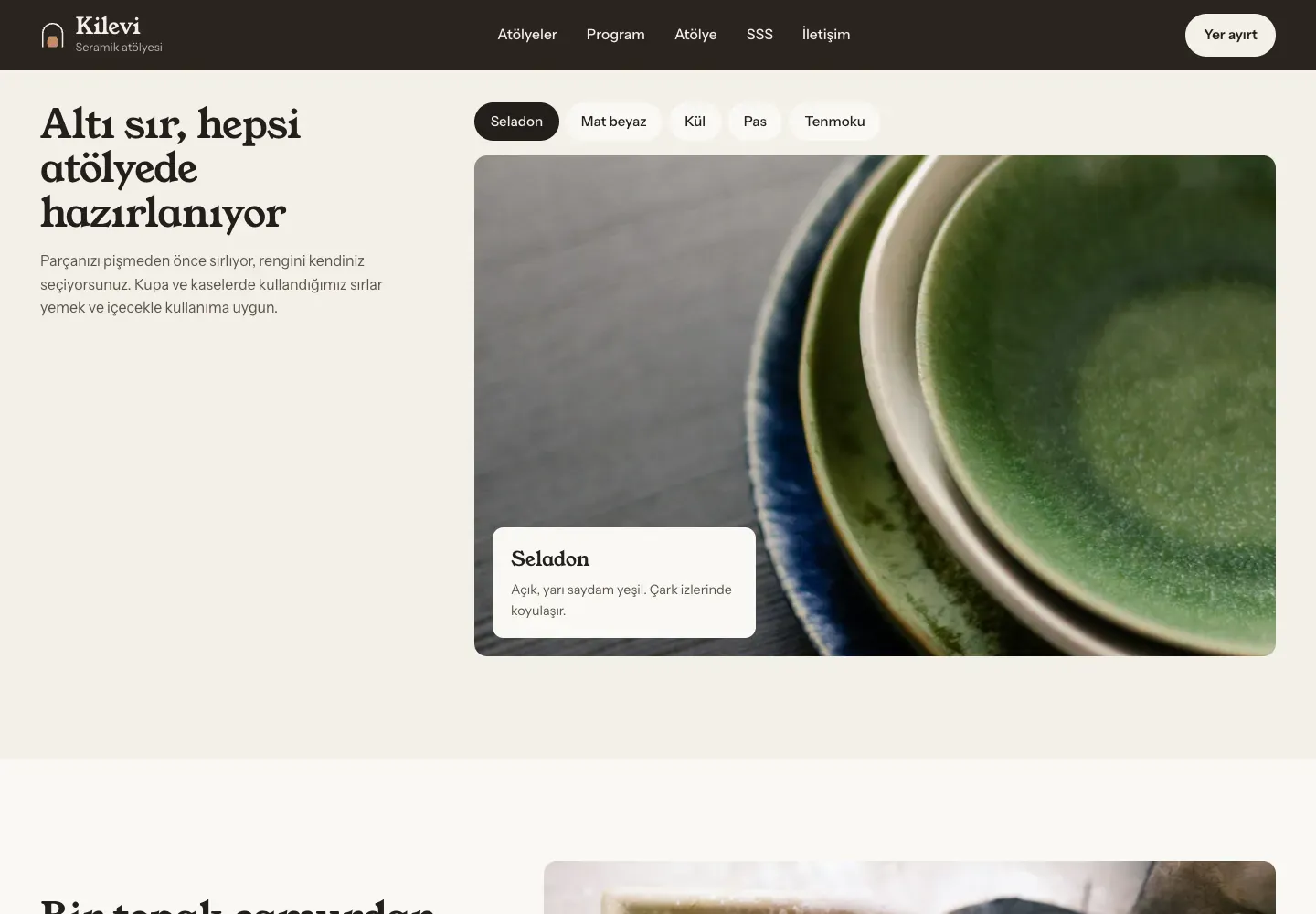
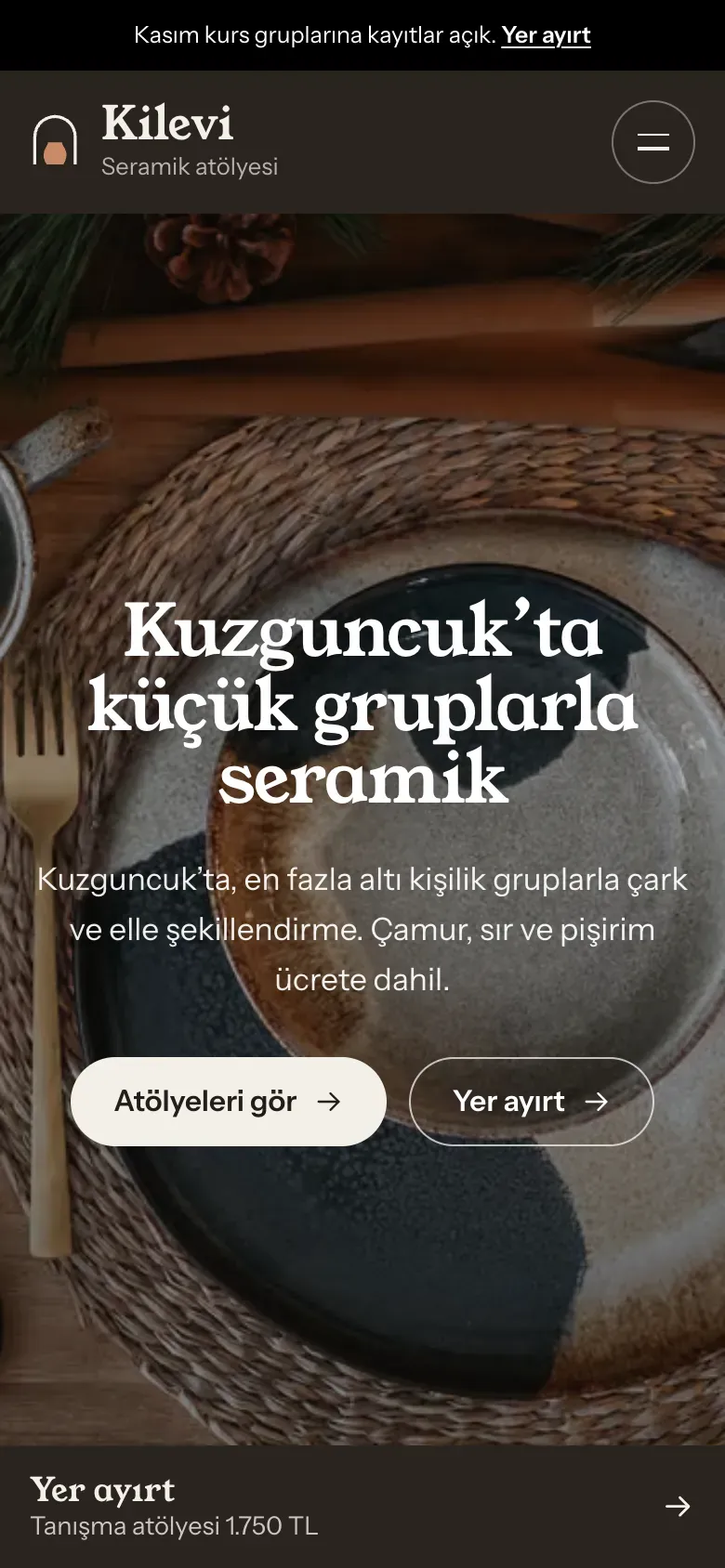
We told the studio’s story with large photographs: a laid table, shelves full of drying pots, the wheel. As a concept we chose royalty-free photos; on a real project the studio’s own shoot would replace them. Every photo is resized and compressed for each screen size. The section on glaze colours works with tabs and loads no extra script.
✦ What we did · 04
Ready for Google
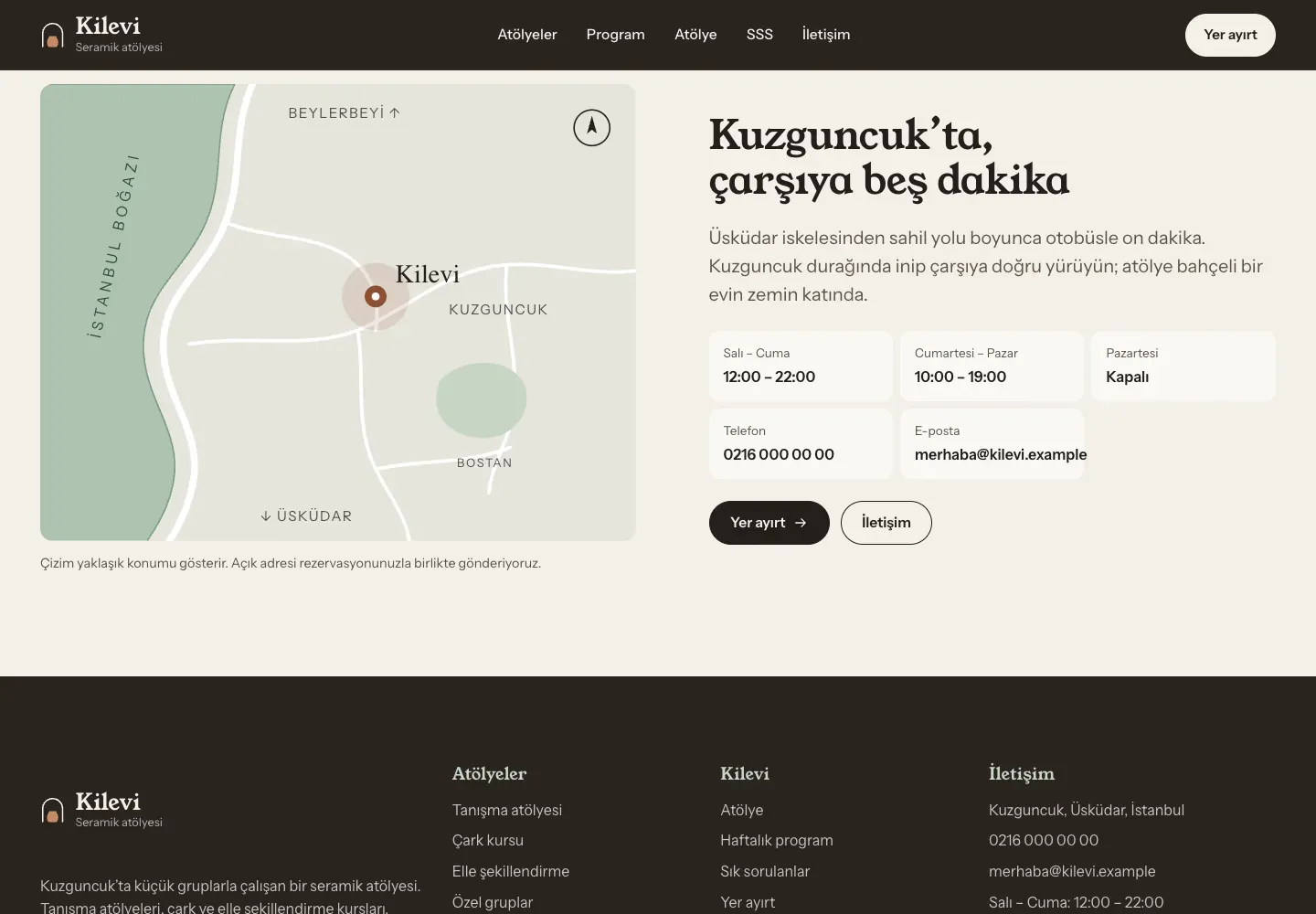
Every page has its own title and description. Business details, services, FAQs and breadcrumbs are also marked up as structured data that search engines read, and the opening hours, address and contact details match between the page and that data. Because the business is not real, the demo is set to stay out of search results if it is ever published.
✦ Screens
Scroll inside to explore ↕


✦ Status and outcome
Kilevi is a concept project with no real client, sales or bookings. What it shows is the structure we deliver in the Launch package: service pages, a booking flow and a Google-ready setup that still load fast on a site built around large photographs.
Looking to build something similar for your business? Get in touch here.